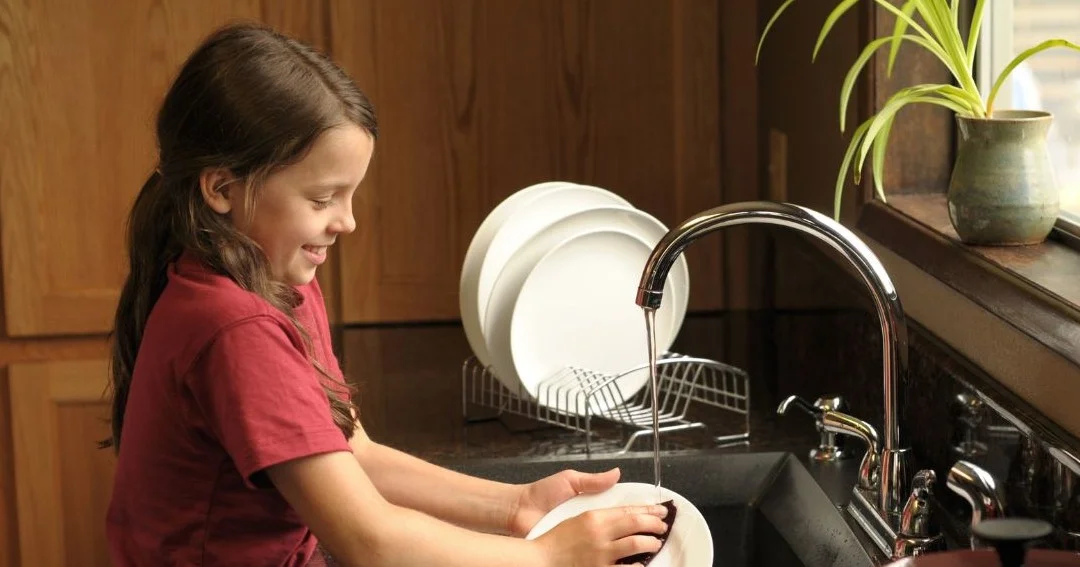
25 Age-Appropriate Chores for Kids
Ages 3–4 (Early Helpers)
Focus: simple tasks that build responsibility and confidence.
- Put toys back in bins
- Put dirty clothes in the hamper
- Throw trash away
- Help wipe spills with a cloth
- Help feed pets
Ages 5–7 (Learning Independence)
Focus: short tasks with clear start and finish.
- Make their bed
- Clear their plate after meals
- Help set the table
- Water plants
- Put away folded laundry
- Help pack their backpack or lunch
Ages 8–10 (Building Responsibility)
Focus: multi-step chores and helping the household run smoothly.
- Load the dishwasher
- Unload the dishwasher
- Sweep floors
- Fold laundry
- Take out small trash bags
- Clean their bedroom
Ages 11–12 (Preparing for Independence)
Focus: life skills and larger household contributions.
- Do their laundry start to finish
- Cook simple meals
- Vacuum common areas
- Clean the bathroom sink and counter
- Help with yard work (raking, watering plants)
- Help unload groceries
Ages 13+ (Teen Responsibilities)
Focus: chores that build independence and adult skills.
- Cook a family meal
- Mow the lawn or manage outdoor chores
Common Challenges and Solutions
Every parent faces resistance to chores. Here are three common sticking points and what tends to help. And it is worth the effort: in a US study of nearly 10,000 children, kindergartners who did chores more often rated themselves as more capable by third grade. That is an association, not proof that chores caused it (White et al., 2019, Journal of Developmental & Behavioral Pediatrics).
The Perfectionist Trap
Many of us redo our child's work without thinking. If their work is always redone, kids can start to feel their effort doesn't count. Focus on effort and improvement over perfection.
Inconsistent Expectations
Children thrive on routine and clear expectations. Create visual reminders and consistent timing. Try linking chores to things you already do (like clearing the table right after dinner) rather than trying to set up entirely new time slots.
Age-Inappropriate Tasks
Mismatched expectations lead to frustration for everyone. Use this guide as a starting point, but remember that every child develops differently. Some 6-year-olds can handle tasks typically appropriate for 8-year-olds, while others need more time to develop the necessary skills.
Your Action Plan: Getting Started This Week
Ready to implement age-appropriate chores in your home? Here's your step-by-step plan to get started:
- Choose 2-3 chores from your child's age range that fit naturally into your current routine. Don't overwhelm yourself or your child with too many new expectations at once.
- Explain the "why" behind each chore in terms your child can understand. "When you clear your plate, it helps our family have a clean kitchen for the next meal."
- Demonstrate the task step-by-step and do it together several times before expecting independence. Expect to practice together several times before your child does it alone.
- Create visual reminders like a simple checklist or pictures showing the steps. This can cut down on nagging and help kids do it on their own.
- Celebrate effort over results for the first few weeks. Focus on building positive associations with contributing to the family.
- Be patient with the learning curve and resist the urge to "help" by redoing their work. Remember, building life skills is more important than having a perfectly made bed.
- Adjust expectations based on your child's response after two weeks. If a task is too challenging, break it into smaller steps or try a different chore from the same age group.
Sources
- White EM, DeBoer MD, Scharf RJ. Associations Between Household Chores and Childhood Self-Competency. Journal of Developmental & Behavioral Pediatrics, 2019. PubMed 30507727